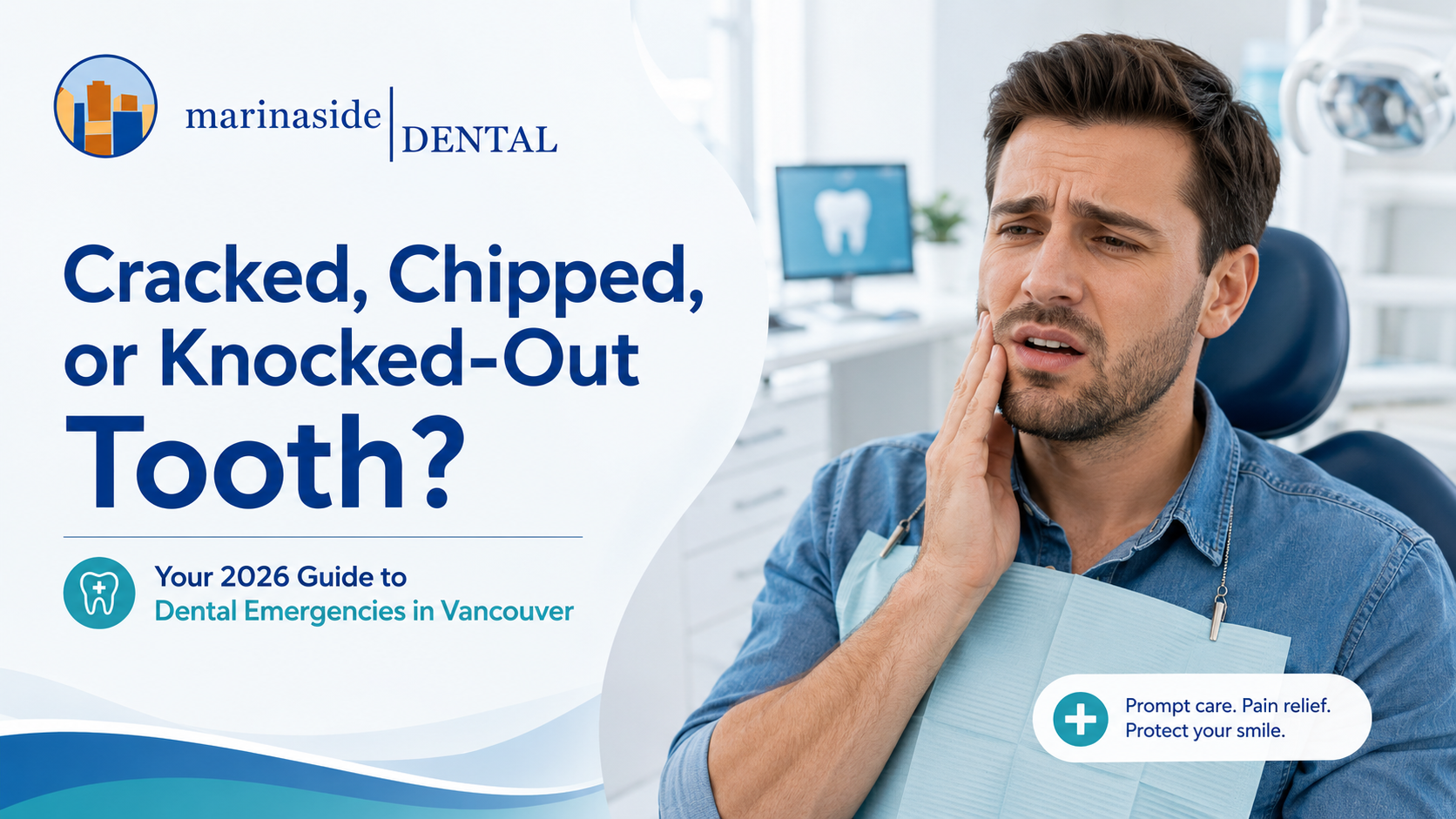
Dental emergencies can happen suddenly. You may bite into something hard, fall during sports, wake up with severe tooth pain, or notice that a crown or filling has come loose. When something unexpected happens to your teeth or gums, knowing what to do right away can reduce pain, protect your oral health, and sometimes help save a natural tooth.
In 2026, patients are more aware of the importance of quick dental care. A cracked tooth, chipped tooth, knocked-out tooth, swelling, or severe toothache should not be ignored. Some problems may look minor at first but can become more serious if bacteria enter the tooth or surrounding tissues.
If you are searching for an emergency dentist Vancouver patients can rely on, Marinaside Dental provides urgent dental care for patients in Yaletown and surrounding Vancouver communities. At Marinaside Dental, our team focuses on relieving discomfort, diagnosing the cause of the problem, and recommending treatment to protect your smile.
What Counts as a Dental Emergency?
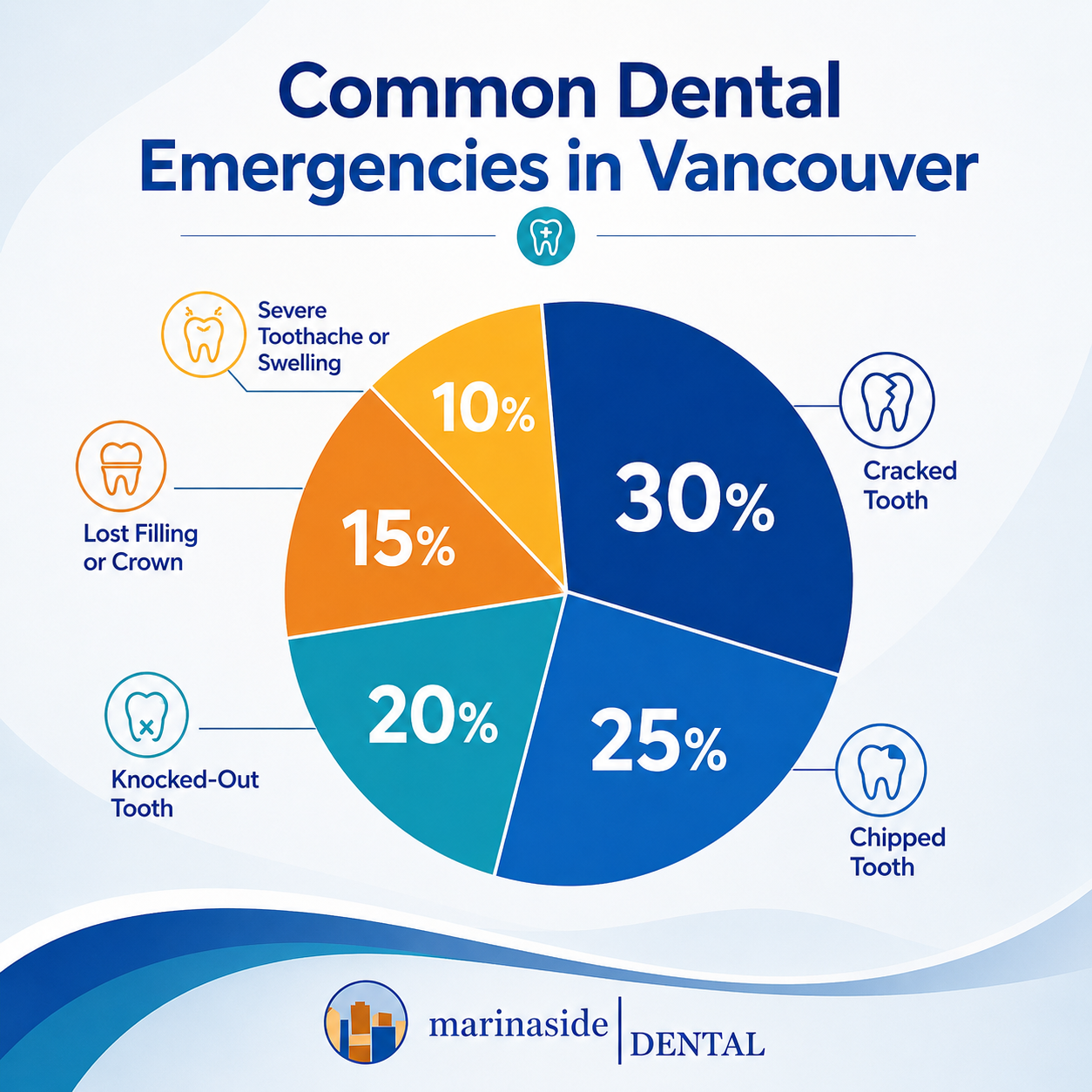
A dental emergency is any urgent oral health problem that needs prompt attention to relieve pain, stop bleeding, control infection, or prevent permanent damage. Some emergencies involve visible injury, while others may involve pain, swelling, or infection that develops inside the tooth or gums.
Common dental emergencies include:
- Cracked or fractured tooth
- Chipped tooth
- Knocked-out tooth
- Severe toothache
- Dental abscess or facial swelling
- Lost filling or crown
- Broken denture or bridge
- Bleeding after trauma
- Pain when biting or chewing
If you are unsure whether your situation is urgent, it is better to contact a dentist in Vancouver for guidance rather than waiting until symptoms get worse.
Cracked Tooth: What You Should Know
Symptoms of a cracked tooth may include:
- Sharp pain when chewing
- Sensitivity to temperature
- Pain that comes and goes
- Discomfort when releasing your bite
- Swelling around the gum
- A visible line or fracture in the tooth
A cracked tooth should be examined promptly because deeper cracks can allow bacteria to reach the pulp, which contains nerves and blood vessels. If the pulp becomes inflamed or infected, root canal treatment may be needed.
Until your appointment, avoid chewing on the affected side. Rinse gently with warm water and use a cold compress if there is swelling. Do not place aspirin directly on the tooth or gum, as this can irritate the tissue.
Chipped Tooth: Is It Always an Emergency?
A chipped tooth may or may not be painful. A small chip in the enamel may feel rough but may not cause serious discomfort. A deeper chip can expose dentin or pulp and may lead to sensitivity, pain, or infection risk.
A chipped tooth may need treatment if:
- The tooth is painful
- The chip is large
- The edge is sharp
- The tooth is sensitive
- The chip affects your smile
- There is bleeding or swelling
- The tooth feels weak when biting
Treatment depends on the size and depth of the chip. Minor chips may be repaired with dental bonding. Larger chips may require a veneer, crown, or other restorative treatment. If the nerve is involved, root canal therapy may be recommended before restoring the tooth.
For patients concerned about appearance after a chipped front tooth, cosmetic dentistry may help restore tooth shape, colour, and smile balance.
Knocked-Out Tooth: Act Quickly
A knocked-out tooth, also called an avulsed tooth, is one of the most serious dental emergencies. Fast action can improve the chance of saving the tooth.
If a permanent tooth is knocked out, follow these steps:
1. Pick up the tooth by the crown, not the root.2. Do not scrub the tooth or remove tissue fragments.
3. Rinse gently with milk or saline if it is dirty.
4. Try to place the tooth back into the socket if possible.
5. If you cannot reinsert it, keep it in milk or saliva.
6. Contact an emergency dentist immediately.
Time matters. A knocked-out permanent tooth has the best chance of being saved when treated quickly. Do not store the tooth in water for long periods because this may damage the root surface cells.
Baby teeth should not usually be placed back into the socket because this may damage the developing adult tooth. If a child loses a baby tooth due to trauma, contact a dentist for proper evaluation.
Severe Toothache or Swelling
A severe toothache can be a sign of deep decay, pulpitis, dental infection, gum disease, trauma, or a cracked tooth. Pain that keeps you awake, worsens when lying down, or comes with swelling should be treated as urgent.
Signs of a possible dental infection include:
- Throbbing tooth pain
- Swelling in the gum, jaw, or face
- Bad taste in the mouth
- Fever
- Pain when chewing
- Sensitivity to heat
- A pimple-like bump on the gum
- Difficulty opening the mouth
Dental infections can spread if left untreated. If you have facial swelling, fever, difficulty breathing, or difficulty swallowing, seek urgent medical care immediately.
For dental infections, treatment may include drainage, antibiotics when appropriate, root canal therapy, extraction, or other care depending on the diagnosis. If the tooth can be saved, your dentist may recommend root canal treatment to remove infected pulp and preserve the natural tooth.
Lost Filling or Crown
A lost filling or crown may not always cause severe pain, but it should still be addressed quickly. When a restoration falls out, the tooth underneath may be exposed to bacteria, temperature sensitivity, and bite pressure.
If a crown comes off, keep it and bring it to your appointment. Do not use household glue to reattach it. If the tooth is sensitive, avoid chewing on that side and keep the area clean.
A lost crown or filling may be repaired or replaced depending on the condition of the remaining tooth. If there is decay, fracture, or structural weakness, a new restoration may be needed.
Marinaside Dental provides crowns and bridges to help restore damaged teeth and protect long-term function.
How an Emergency Dentist Diagnoses the Problem
During an emergency dental visit, the first goal is to reduce pain and identify the cause of the problem. Your dentist may ask about your symptoms, how the injury happened, when the pain started, and whether you have swelling or sensitivity.
Your exam may include:
- Visual examination
- Bite assessment
- Gum and soft tissue evaluation
- Tooth mobility testing
- Percussion or sensitivity testing
- Digital X-rays
- Intraoral imaging
- Review of medical history
Digital imaging can help the dentist check for fractures, infection, bone changes, decay, and root damage. Marinaside Dental uses TRIOS® Digital Imaging to support accurate diagnosis and treatment planning.
Treatment Options for Dental Emergencies
Emergency dental treatment depends on the type and severity of the problem. The goal may be to relieve pain, stabilize the tooth, control infection, repair damage, or prevent further complications.
Treatment may include:
- Dental bonding for small chips
- Smoothing rough enamel edges
- Dental crown for larger cracks or fractures
- Root canal therapy for infected or damaged pulp
- Recementing or replacing a crown
- Replacing a lost filling
- Tooth splinting after trauma
- Extraction if the tooth cannot be saved
- Antibiotics when clinically necessary
- Pain management and follow-up care
If a tooth cannot be restored, your dentist may discuss replacement options such as dental implants, bridges, or dentures. You can learn more about dental implants and extractions if tooth removal becomes necessary.
What to Do Before You Reach the Dentist
While waiting for your appointment, simple steps may help protect your mouth and reduce discomfort.
For a cracked or chipped tooth, rinse with warm water and avoid chewing on that side. If the edge is sharp, cover it with orthodontic wax or sugar-free gum temporarily.
For swelling, apply a cold compress to the outside of the face for short intervals. Do not apply heat unless instructed by a dental professional.
For a knocked-out tooth, keep the tooth moist in milk or saliva and seek emergency care immediately.
For pain, use over-the-counter pain relief only as directed on the label and only if it is safe for you based on your medical history. Avoid placing medication directly on the gum.
These steps are temporary. They do not replace professional dental care.
How to Prevent Dental Emergencies
Not every dental emergency can be prevented, but many risks can be reduced with good oral habits and regular care.
To lower your risk:
- Wear a mouthguard during sports
- Use a nightguard if you grind your teeth
- Avoid chewing ice, pens, or hard objects
- Do not use teeth to open packages
- Treat cavities early
- Replace weak or failing restorations
- Schedule routine dental exams
- Maintain good brushing and flossing habits
Preventive dental visits help detect small problems before they become painful emergencies. Regular care also allows your dentist to monitor cracks, worn teeth, gum health, and old restorations.
When Should You Call an Emergency Dentist?
You should call an emergency dentist if you have severe pain, swelling, bleeding, a knocked-out tooth, a cracked tooth, a broken restoration, or trauma to the mouth. You should also call if pain is getting worse or if you are unable to chew normally.
Patients searching for dental emergency Vancouver care should not wait for symptoms to become unbearable. Early treatment may make the difference between a simple repair and more complex treatment.
If you are in Yaletown or nearby Vancouver communities, Marinaside Dental offers emergency dental care to help patients get timely support when urgent problems happen.
Final Thoughts
A cracked, chipped, or knocked-out tooth can be stressful, but quick action can protect your smile and reduce the risk of long-term damage. Minor chips may need simple repair, while deeper cracks, severe pain, swelling, or knocked-out teeth require urgent dental attention.
The best step is to contact a dental professional as soon as possible. Whether you need pain relief, a tooth repair, infection control, or a treatment plan after trauma, Marinaside Dental can help.
If you need an emergency dentist Vancouver patients can turn to, schedule an appointment with Marinaside Dental for prompt dental care in Yaletown.
